Tafourah Medical Center · Breast Cancer Awareness Month, October 2026
Nine months is too long to wait
In Uganda, most women who are later diagnosed with breast cancer noticed something was wrong at least nine months earlier. A lump. A change in shape. A nipple that looked different. Research points to cost, distance, stigma and fear as common reasons for delay.
At Tafourah Medical Center, we want October to change that story. This article gives you the facts, the warning signs and a simple plan you can start today.
The numbers, and the good news hidden in them
Breast cancer is the most common cancer in women worldwide. The World Health Organization reports that about 2.4 million women were diagnosed in 2024 and nearly 694,000 died from it.
The gap between countries tells the real story. In high-income countries, about 87% of women diagnosed survive at least five years. In low-income countries, that figure is only 42%. Late diagnosis is a major driver of that gap. What matters most is when it is found.
The Uganda Cancer Institute reports more than 4,000 new breast cancer cases a year in Uganda, and says many women arrive with advanced disease. A study of patients at the Institute found that about four in ten were already at stage III and more than a third at stage IV when diagnosed.
Now the good news. When breast cancer is still confined to the breast, US data show five-year survival above 99%. Once it has spread to distant organs, that drops to about 32%. The Uganda Cancer Institute says up to 90% of breast cancers can be cured when found early and treated on time.
Early is everything. Every week counts.
Know your normal
You do not need a complicated routine. Leading bodies, including the American Cancer Society, now emphasise breast self-awareness: knowing how your breasts normally look and feel, so you notice a change quickly. Look and feel while bathing, dressing or applying lotion. If you prefer to check on a schedule, a week after your period starts is usually when breasts are least tender.
See a health professional if you notice:
- A new lump or thickening in the breast or underarm
- Swelling in all or part of a breast
- A change in the size or shape of a breast
- Dimpling, puckering, redness or other skin changes
- Nipple discharge that is not breast milk, especially if it is bloody
- Lumpiness or tissue in one breast that feels different from the other
- Persistent new breast pain
Take a breath: most breast lumps are not cancer. Many are harmless, such as fibroadenomas or infections. But only an assessment can tell the difference, and the sooner you have it, the less time worry has to grow.
Four myths that cost lives
“I have no family history, so I’m safe.” Roughly half of breast cancers happen in women with no risk factors other than being a woman and growing older, according to WHO.
“No lump means no cancer.” Early breast cancers often cause no symptoms at all. That is why screening matters even when you feel fine.
“It’s a women-only disease.” Between 0.5% and 1% of breast cancers occur in men. Men should report breast lumps too.
“Cancer treatment is out of reach.” Cost and distance are real barriers, but the Uganda Cancer Institute states that government-supported breast cancer treatment there is free or subsidised. A conversation with a doctor is the first step to finding your route.
Screening: what to ask your doctor
Mammography is the standard screening test, and it can find cancers too small to feel. Guidelines from leading bodies differ on the starting age, from 40 to 50, and on how often to repeat it. Your own history matters, so the right answer is personal.
If your mother, sister or daughter has had breast cancer, your risk is roughly double, and higher still with two close relatives. Tell your doctor. You may need to start screening earlier or discuss genetic counselling.
A clinical breast examination by a trained clinician is also a practical way to check a breast concern, and any symptom should be examined whatever your age.
Lower your risk where you can
Not every risk can be changed, but several can:
- Move your body. Aim for at least 30 minutes of activity most days, or about 150 minutes a week.
- Keep a healthy weight. Gaining weight as an adult raises risk, especially after menopause.
- Cut back on alcohol. Research shows even small daily amounts raise risk, and no level is completely safe.
- Breastfeed if you can. Breastfeeding is linked with lower breast cancer risk, and some studies suggest longer breastfeeding lowers it further.
Healthy habits reduce risk. They do not remove it, which is why they work alongside screening and not instead of it.
What happens when you come in
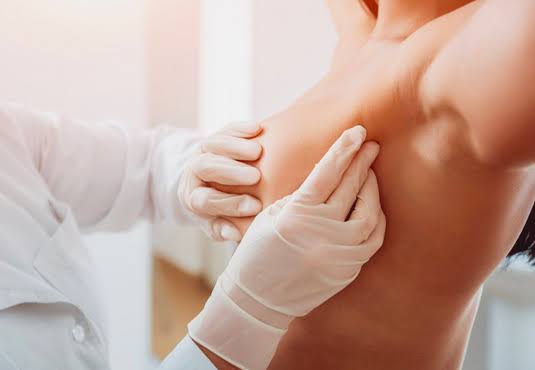
We believe in honest, assessment-first care. A breast assessment usually starts with a conversation about your symptoms and family history, followed by an examination. If something needs a closer look, the next step is typically imaging, and sometimes a small tissue sample (biopsy) to confirm what it is. You get clear answers at each step and a plan you understand. Most breast changes turn out not to be cancer. When one is, finding out early gives you the most options.
WHO’s global breast cancer goal is for women to be diagnosed within 60 days of first seeking care. Please do not wait longer than you need to.
Your plan for this month
- Look and feel. Spend two minutes this week getting to know your normal.
- Write down your family history. Note any relatives with breast or ovarian cancer.
- Book an assessment if you notice any change, or if you have never had your breasts checked.
- Bring a friend, sister or mother. Facing it together makes the first step easier.
- Share this article. One message can be the nudge someone needs.
Come and see us
At Tafourah Medical Center, our team is here to listen, examine and guide you without judgement. Our gynaecologist offers free consultations on Sundays, so cost does not have to stand between you and an answer.
Don’t wait for nine months. Come in this week.